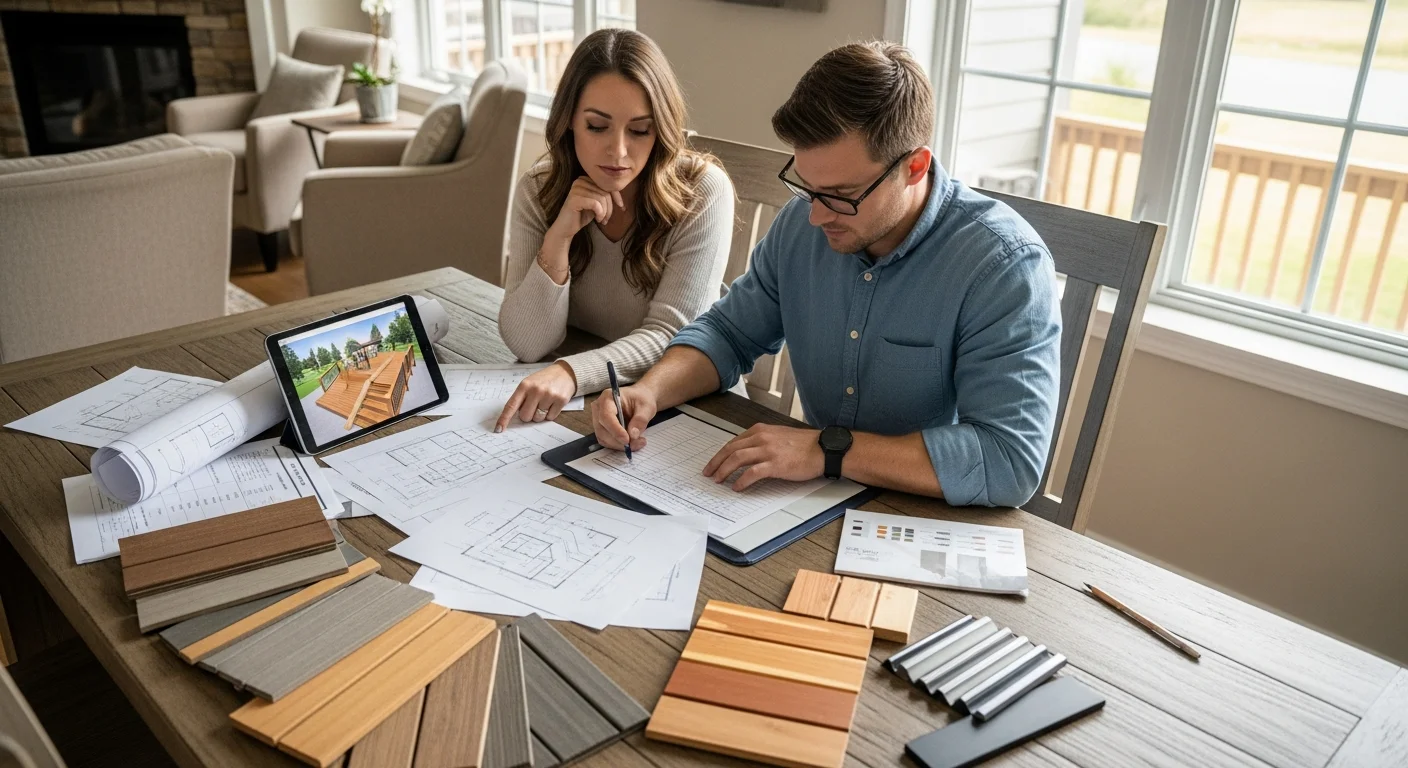
Getting a new deck built is exciting. You start picturing summer cookouts, family dinners outside, and relaxing evenings under the Minnesota sky. Then the quotes come in and suddenly things feel confusing. One contractor says $28,000. Another says $34,000. A third is even higher. Why are the numbers so different? Are you overpaying? Or are you about to choose a bid that leaves out important details?
If you’re trying to compare deck quotes, you’re not alone. Many homeowners across the Twin Cities suburbs struggle to understand what’s actually included in each estimate. The truth is, not all deck quotes are created equal. Some leave out key structural details. Others use vague allowances that make it hard to know what you’re really getting. In this guide, we’ll show you a simple apples-to-apples way to compare bids so you can make a confident decision.
Start With Scope: Are You Pricing the Same Project?
Before you look at price, make sure each contractor is bidding on the same project.
Check the basics:
- Exact deck dimensions
- Number of levels
- Stair size and location
- Landings, bump-outs, or custom features
If one quote includes wider stairs or extra framing and another doesn’t, the price will naturally be different. Make sure the size and layout match before comparing numbers.
Framing Specifications Matter More Than You Think
The frame is the skeleton of your deck. It’s what keeps everything safe and strong.
When you compare deck quotes, review:
- Joist spacing (12” vs 16” on center)
- Beam size
- Post size (4×4 vs 6×6)
- Grade of framing lumber (#1 grade treated lumber used for framing)
- Blocking between joists
Higher-quality builders often use #1 grade treated lumber instead of #2 grade used in lower-cost builds. In Minnesota, decks must handle snow load and freeze-thaw cycles. Stronger framing may cost more upfront but increases durability and reduces future repair risks.
Footings & Foundation: What’s Holding It Up?
Decks across Minnesota must be built below the frost line to prevent shifting.
Compare:
- Footing depth
- Diameter of concrete piers
- Use of helical piers if soil requires it
- Whether soil conditions were evaluated
For heavier structures like covered decks, screened porches, or decks supporting hot tubs, helical piers may be required to safely handle additional load. These systems are engineered for stability and can perform better in certain soil conditions compared to standard concrete footings.
If a quote says “footings per code” without details, ask for clarification. Depth, diameter, and load capacity make a big difference in long-term performance.
Ledger Attachment & Structural Hardware
The ledger board connects your deck to your home. Poor installation here can cause major problems.
Look for:
- Proper flashing to prevent water damage
- Waterproof membrane
- Structural screws (not just lag bolts)
- Galvanized or stainless hardware
- Joist hangers and hurricane ties
These details aren’t flashy, but they directly affect safety and lifespan.
Decking Materials: Brand and Product Line
Not all “composite decking” is the same.
When reviewing bids, make sure the material specifications match:
- Brand name (for example TimberTech® or AZEK®)
- Specific product line (entry-level vs premium)
- Color included or allowance
- Hidden fastening system included
Higher-end lines often provide better fade resistance, durability, and warranties. Make sure you’re comparing the same level of product.
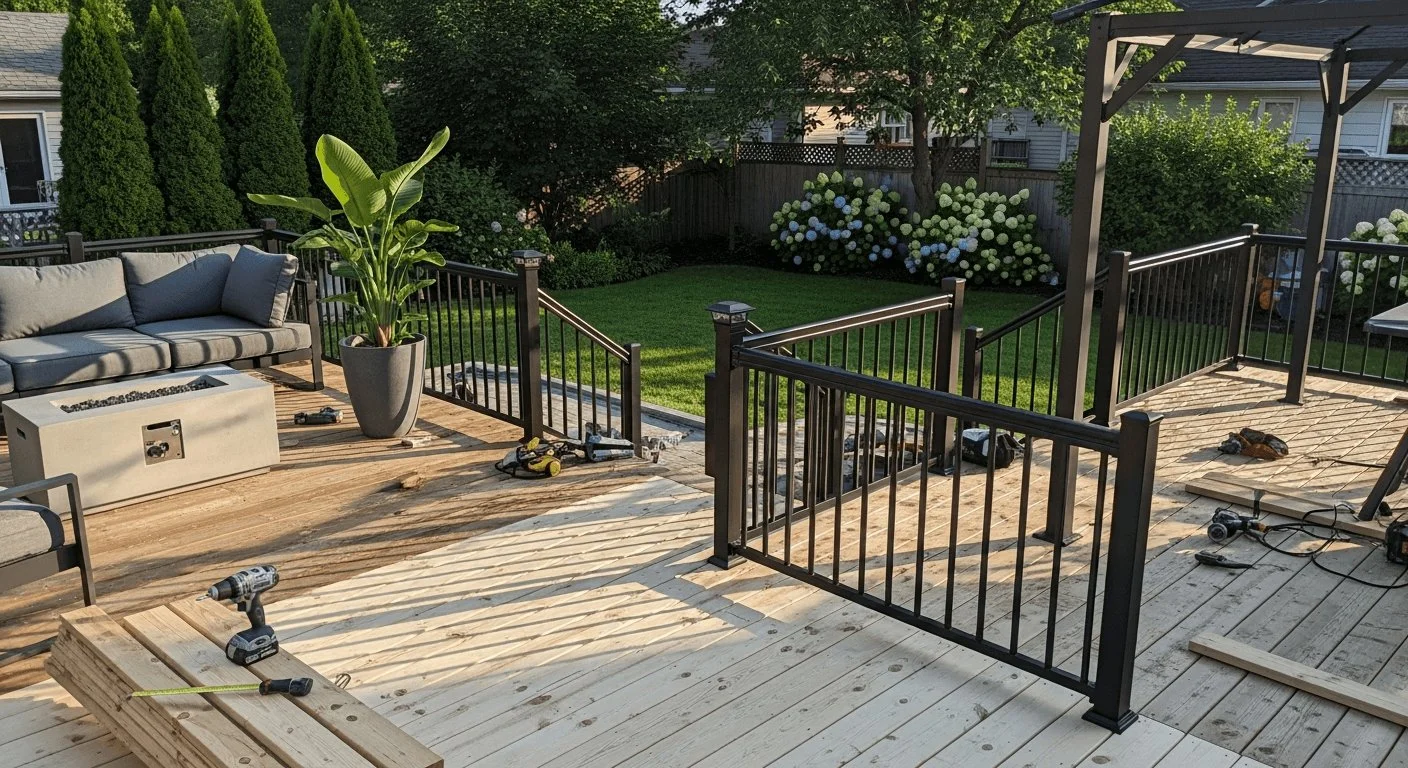
Railing Systems
Railing style impacts both price and appearance.
Compare:
- Aluminum, composite, cable, or wood
- Brand and model
- Post sleeves and caps included
- Cocktail rail upgrades
Cable or premium aluminum rail systems will cost more than standard wood rails, but they also offer longer life and a more modern look.
Additional Add-On Items
Some features are not always included in base quotes but can significantly impact both price and functionality.
Check if the quote includes:
- Under-deck drainage systems
- Skirting
- Fascia wrapping
- Deck lighting options
- Pergolas or shade structures
These items are often priced separately or added later. Make sure you clearly understand what is included in your quote versus what would be considered an upgrade.
Permits & Inspections
Most deck projects in the Twin Cities suburbs require permits.
Ask:
- Who pulls the permit?
- Is engineering required?
- Who schedules inspections?
A professional contractor should handle permits and ensure the project meets all local and state building codes.
Timeline & Project Management
Price matters, but so does project organization.
Compare:
- Estimated start date
- Project duration
- Crew size
- Dedicated project oversight
Clear timelines show that the contractor has a structured and reliable process.
Warranty & Workmanship Coverage
Review the fine print carefully.
Check:
- Manufacturer warranty on materials
- Length of workmanship warranty
- Written documentation provided
- What voids coverage
A strong workmanship warranty shows confidence in the quality of construction.
Change Orders & Payment Structure
Projects sometimes change. Make sure there’s a clear system in place.
Ask:
- How are change orders handled?
- Is pricing agreed upon before work proceeds?
- What deposit amount is required?
- Is the payment schedule tied to project milestones?
Clear terms help prevent confusion and unexpected costs.
Common Deck Quote Traps
Watch for these red flags when you compare deck quotes:
- Vague “material allowance” wording
- No framing specs listed
- No cleanup or debris removal included
- Contractor is not properly licensed
- Contractor is not insured
- Homeowner is asked to pull permits instead of the contractor, this should always be handled by the builder
- No timeline provided
- Weak or unclear warranty language
If something feels unclear or missing, ask questions. A professional contractor will always provide clear answers.
A Simple Apples-to-Apples Checklist
Before choosing a contractor, use this checklist to compare deck quotes fairly:
- Same dimensions?
- Same framing specs?
- Same footing depth?
- Same decking brand and line?
- Same railing system?
- Permits included?
- Same warranty coverage?
- Cleanup included?
- Clear timeline?
Only when these match can you fairly compare prices.
Why Detailed Deck Quotes Sometimes Cost More
Builders who provide detailed, transparent quotes often spend more time planning and specifying materials. They may exceed minimum code requirements, use higher-grade framing lumber, and invest in stronger hardware.
In Minnesota’s climate, shortcuts can lead to expensive repairs later. Paying for quality upfront protects your investment and gives you peace of mind.
Conclusion
When building a new deck, the lowest number on the page isn’t always the best choice. What really matters is the scope, the materials, the structural details, and the long-term durability of the project. Taking time to carefully compare deck quotes helps you avoid surprises and ensures your deck will stand strong through Minnesota winters and busy summers for years to come.
If you’re planning a new deck anywhere in the Twin Cities suburbs, Dupont Decks is here to help. With over two decades of experience, an A+ BBB rating, and a reputation built on quality craftsmanship, we believe transparency matters. If you’d like a detailed, easy-to-understand quote or want a professional team to review your existing deck quotes, contact us today to request your free, no-obligation estimate and start creating the backyard space your family deserves.