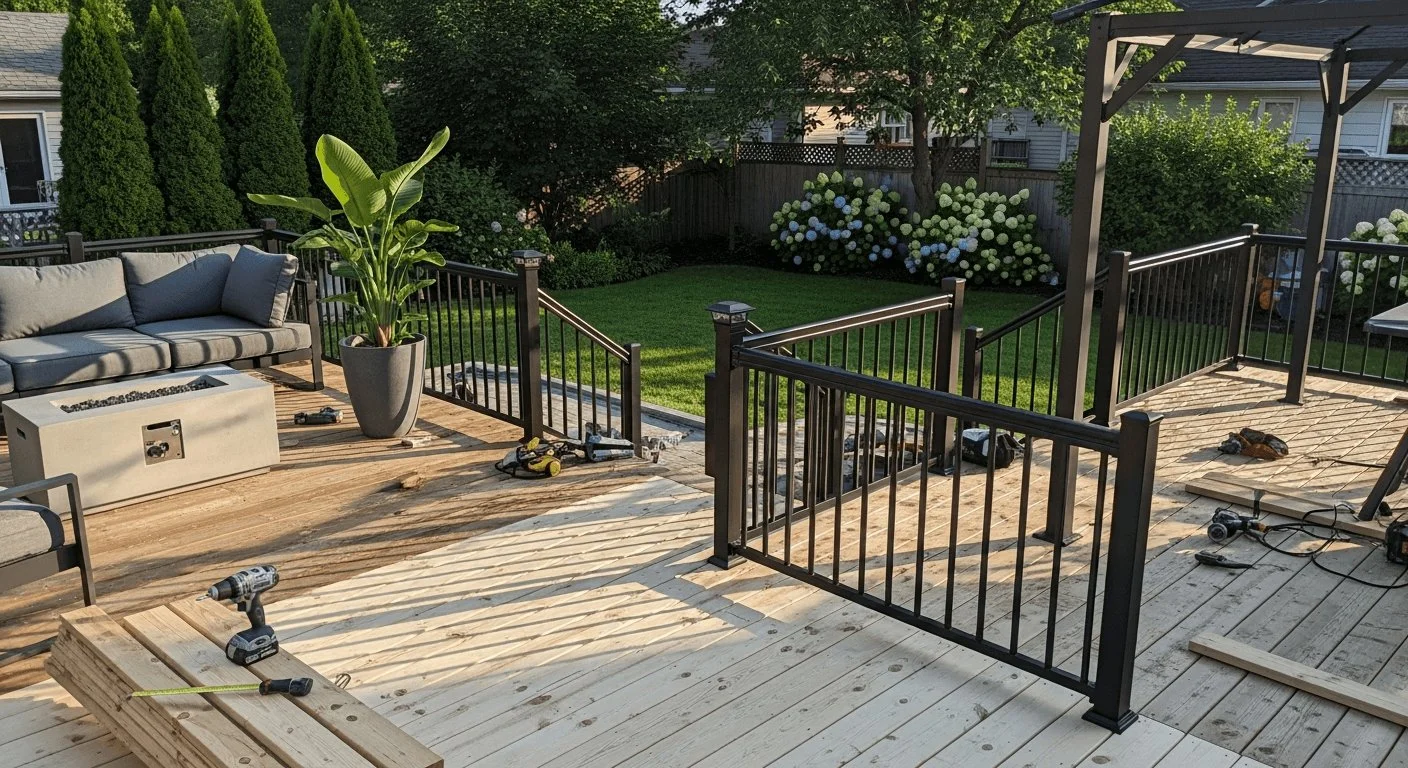
As the crisp Minnesota air settles in for fall, it’s time to turn your attention to your outdoor living space. The approaching winter weather poses a threat to your deck, but you can protect it with some proactive deck maintenance. Preparing your deck surface for the snow and ice ahead will not only extend its life but also save you from costly repairs in the spring.
Fall is the ideal time to take action. Once snow starts falling, it becomes much harder to properly clean, inspect, and seal your deck. Taking care of these steps early gives your deck the best chance to handle the long winter ahead. The good news? A little effort in the fall can save you from costly repairs in the spring. Whether your deck is newer or showing signs of age, preparing it now can make all the difference. This guide will walk you through the essential steps to ensure your deck remains in great shape through the colder months.
Why It’s Important to Winterize Your Deck
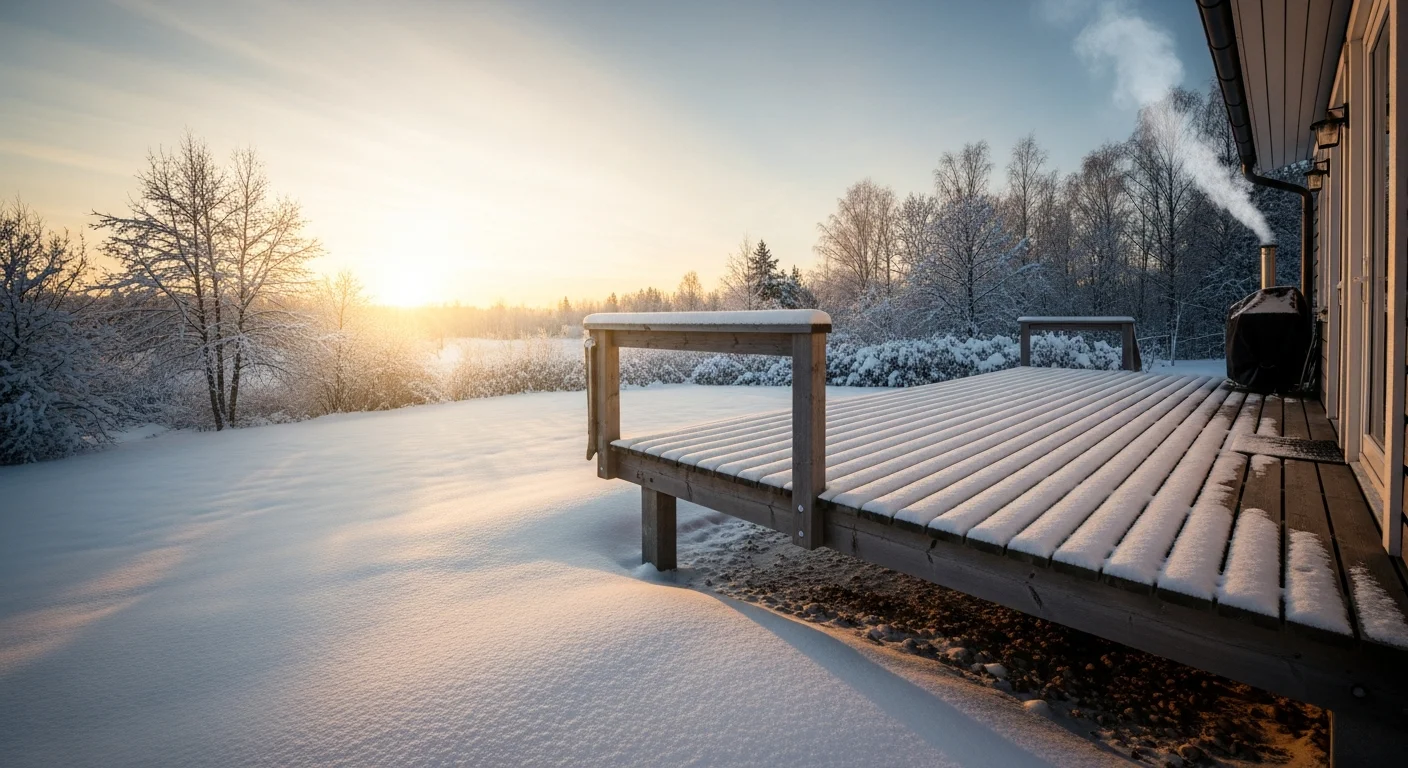
If you live in the Twin Cities Metro, your deck faces extreme weather every year. Snow piles up, ice forms, and temperatures go up and down constantly. This freeze-thaw cycle is one of the biggest threats to your deck.
When water seeps into wood and then freezes, it expands. Over time, this can cause cracks, warping, and even rot. If your deck isn’t sealed properly, moisture can get deep into the boards and weaken the structure.
Another issue is safety. Loose boards, weak railings, or unstable stairs can become dangerous especially when covered in ice or snow. What might seem like a small issue in the fall can turn into a serious hazard in winter.
Winterizing your deck is not just about protecting it—it’s about protecting your home, your investment, and your family.
Step-by-Step Guide to Winterizing Your Deck
Getting your deck ready for the winter weather doesn’t have to be a complicated task. By following a few essential steps, you can effectively protect your investment from the harsh winter months ahead. Proper deck maintenance now will prevent damage and make your spring cleanup much easier.
Let’s walk through the process, from cleaning and inspecting to sealing and storing your accessories. These expert tips will help you avoid common mistakes and ensure your deck is fully prepared for whatever winter brings.
1. Deep Clean Your Deck Surface
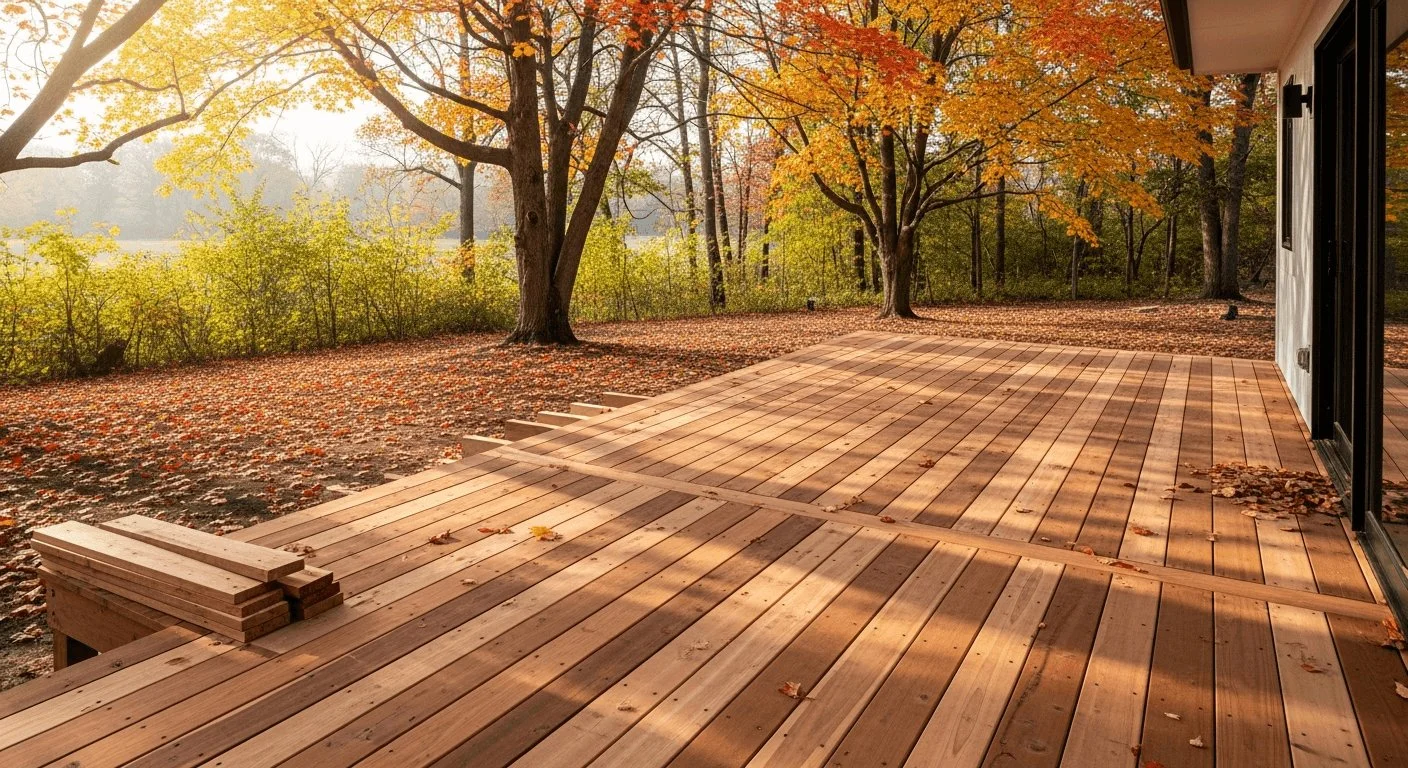
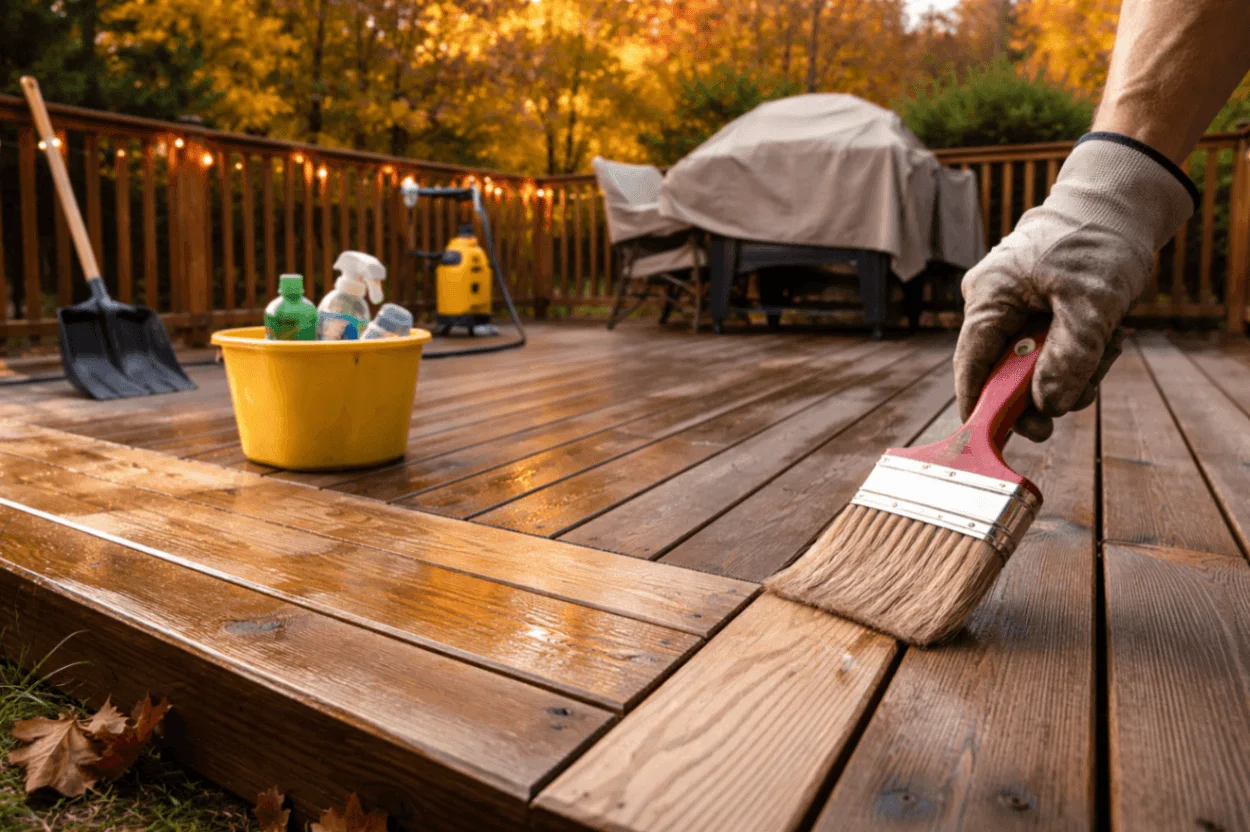
Start by giving your deck a thorough cleaning. Over time, leaves, dirt, and debris build up on the surface. If left there, they trap moisture and lead to mold, mildew, and rot.
Use a broom or leaf blower to clear off debris. Then wash the deck using a garden hose or a pressure washer (on a low setting). A deck cleaner can help remove stains, algae, and grime.
Make sure the deck dries completely before moving on to the next steps. A clean surface is key to proper sealing and protection.
2. Inspect for Damage and Structural Issues
Once your deck is clean, take a close look at its condition. Walk around and check for:
- Cracked or warped boards
- Soft or spongy spots (a sign of rot)
- Loose nails or screws
- Wobbly railings
- Unstable stairs
- Footing movement
Don’t forget to check underneath the deck as well. The support structure is just as important as the surface.
If you find small issues, they can often be fixed quickly. But if you notice widespread damage, it could be a sign of deeper problems.
3. Sand and Repair Problem Areas
Rough spots and splinters are not just uncomfortable. They can also let moisture in more easily. Sand down any rough areas to create a smooth surface.
Replace any damaged boards that are beyond repair. Tighten loose screws and secure any weak areas. These small fixes can make a big difference in how well your deck holds up through winter.
4. Apply Sealant or Protective Finish
One of the most important steps to winterize your deck is sealing it.
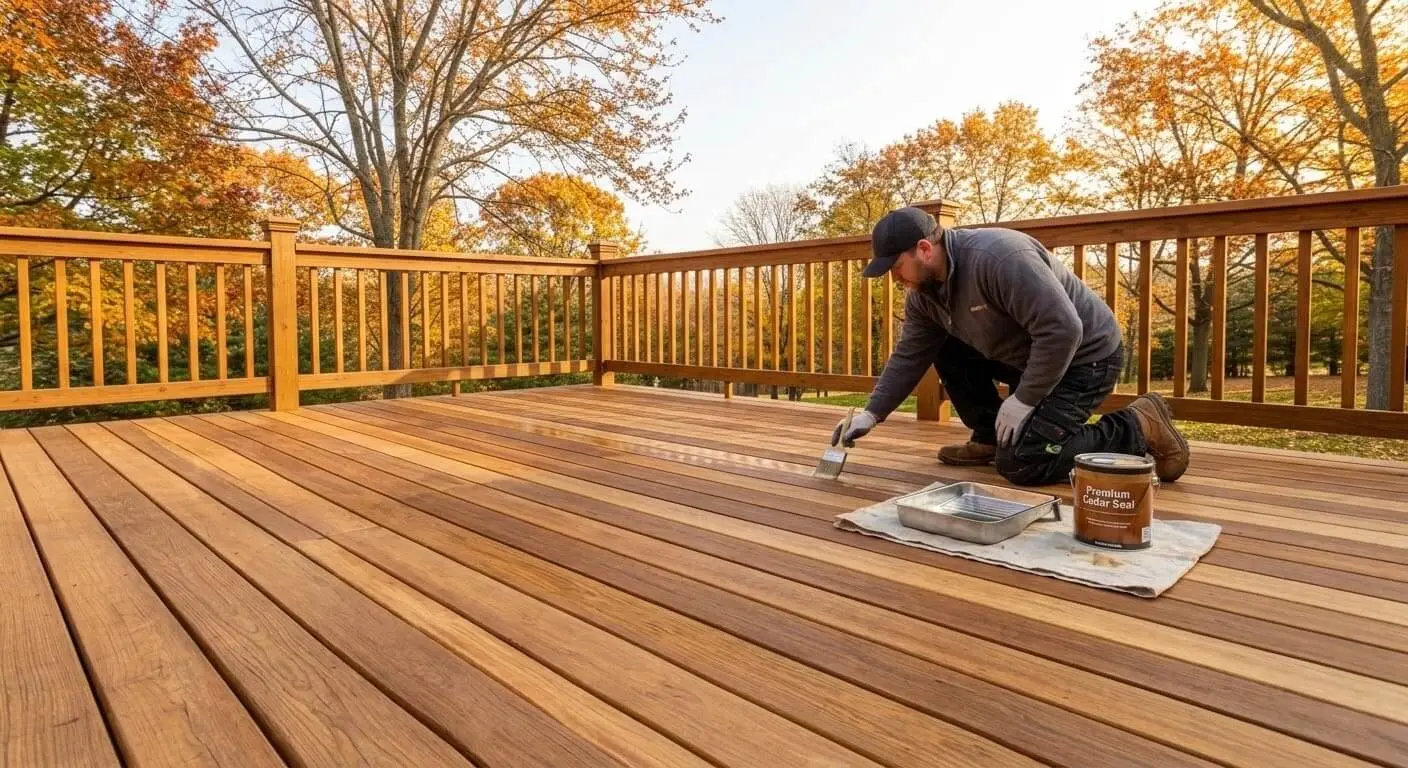
sealant helps protect your deck from moisture, snow, and ice. It creates a barrier that keeps water from soaking into the wood. This reduces the risk of cracking, warping, and rot.
If your wood deck hasn’t been sealed in the last couple of years, now is the time to do it. Choose a high-quality water-resistant sealant and apply it on a dry day when temperatures are above about 50°F. If it is already too cold, plan to seal first thing in spring.
For homeowners in Minnesota, this step is especially important because of the long, harsh winters.
5. Clear and Protect Deck Accessories
Before winter hits, remove as many items from your deck as possible. This includes:
- Outdoor furniture
- Planters
- Grills (if not in use)
- Decorations
Store them in a garage or shed to protect them from snow and ice.
If something must stay outside, cover it with weatherproof covers. This not only protects your belongings but also makes it easier to keep your deck clear during winter.
Smart Off-Season Deck Upgrades to Consider
Fall is also a great time to think about improvements. While you’re preparing your deck for winter, consider upgrades that can make it safer and more enjoyable.
Upgrade Lighting for Safety
Days get shorter in winter, and good lighting becomes more important. Adding deck lighting—especially on stairs and railings—can help prevent accidents.
LED lighting is a popular choice because it’s energy-efficient and long-lasting. It also adds a nice look to your outdoor space.
Add Weather-Resistant Features
If you want to use your deck longer into the colder months, consider adding features like:
- Pergolas
- Partial enclosures
- Windbreak panels
These additions can make your deck more comfortable and usable, even in cooler weather.
Improve Drainage and Snow Management
Proper drainage is key to preventing water buildup and ice formation. Make sure your deck is slightly sloped so water can run off.
Check gaps between boards and clear out anything that might block drainage. This simple step can help prevent ice patches and damage.
Signs Your Deck May Need More Than Winter Maintenance
Sometimes, winterizing your deck is not enough. If your deck has serious issues, it may be time to think about a bigger solution.
Here are some signs to watch for:
- Large areas of rot or decay
- Sagging or uneven structure
- Loose or unstable railings
- Frequent repairs year after year
- Deck age (10–15+ years depending on material)
- Footing movement
If your deck shows these signs, repairs may only be a temporary fix. Continuing to patch it up could cost more in the long run.
Plan Ahead: Why Spring Might Be the Right Time for a New Deck
Winter prep is important, but it can also be a reality check. If your deck is older or struggling, now is the perfect time to start planning for a replacement in the spring.
Building a new deck gives you the chance to create something that fits your lifestyle today. Maybe you want more space for entertaining, a better layout, or low-maintenance materials that last longer.
Modern decking options like composite materials (such as TimberTech) and Westbury railings offer durability, beauty, and less upkeep compared to traditional wood.
Planning ahead also means you can avoid the rush in spring and get your project scheduled early.
Final Checklist to Winterize Your Deck
Before the snow arrives, make sure you’ve completed these steps:
- Clean the deck thoroughly
- Inspect for damage and safety issues
- Repair and sand problem areas
- Apply a protective sealant (wood decks only)
- Remove or cover outdoor items
- Check drainage and structure
Following this checklist will help your deck survive the winter and stay in better shape for years to come.
Conclusion
Winterizing your deck is one of the smartest steps you can take as a homeowner in Minnesota. With heavy snow, freezing temperatures, and constant moisture, your deck goes through a lot every winter. By cleaning, inspecting, repairing, and sealing it before the season starts, you can protect your investment and avoid bigger problems later. But just as important, this process gives you a chance to really look at your deck’s condition and ask an important question. Will simple maintenance be enough, or is it time for something more long-term?
If you’re unsure where your deck stands, now is the perfect time to evaluate it. At Dupont Decks, we help homeowners across the Twin Cities Metro understand their options whether that means maintaining what you have or planning for a new, custom-built deck that better fits your lifestyle. With over two decades of experience and a reputation built on quality craftsmanship, we’re here to guide you in making the right decision for your home. Reach out through our online form to request your 100% free, no-obligation quote and take the first step toward a safer, more beautiful outdoor space.